
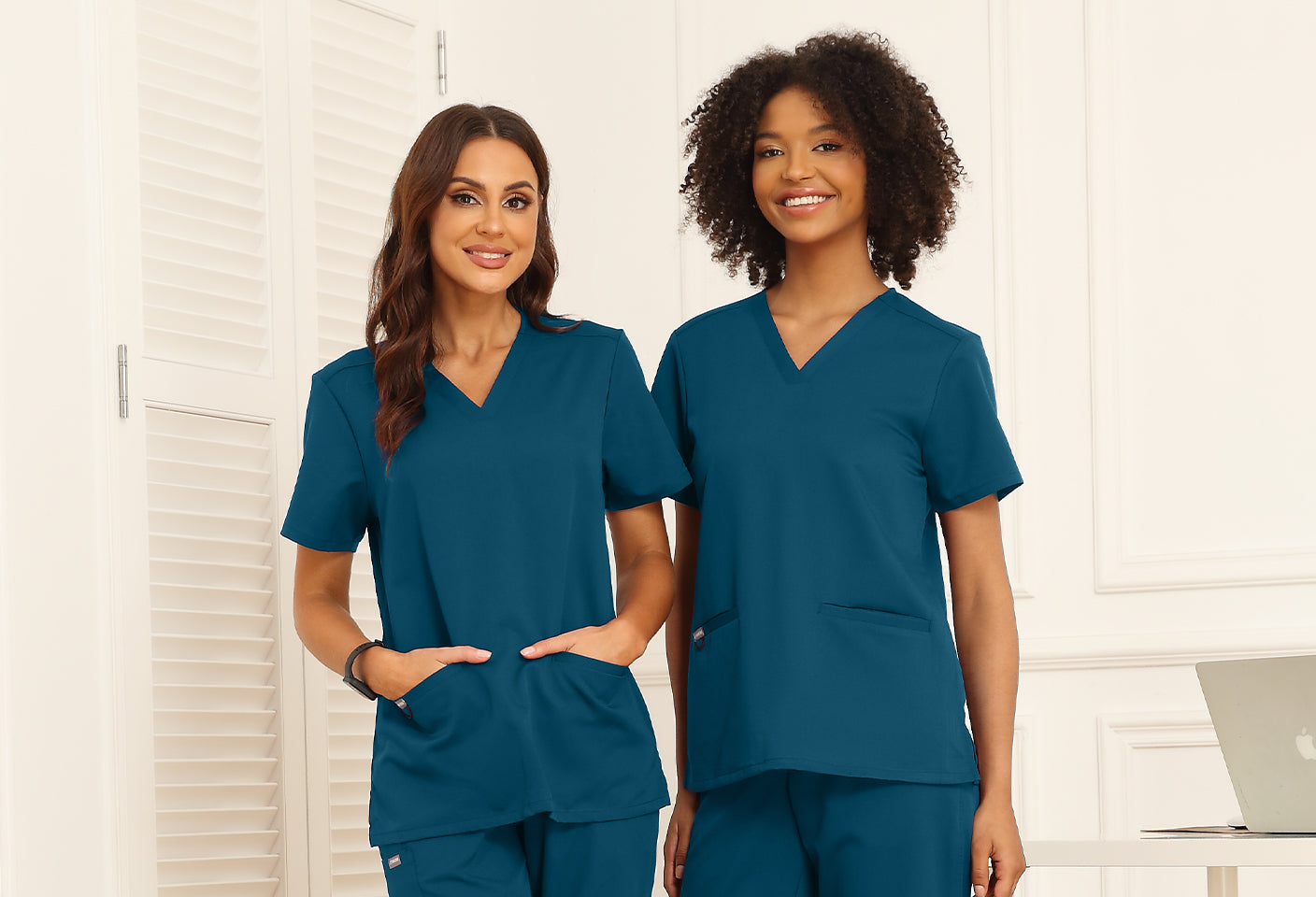

How Medical Uniforms Shape Work Performance in 4 perspectives

Medical Scrubs are not merely professional attire; they influence healthcare workers' physical comfort, operational fluency, work efficiency, and psychological state through multiple dimensions such as fabric properties, tailoring, functional design, and psychological cues. Every detail, from fit to visual symbols, can affect work performance and medical service quality. In high-pressure healthcare environments where split-second decisions matter, the right uniform becomes an unsung ally, supporting consistent performance across long shifts and diverse tasks.
Fabric Properties and Work Status
Fabric directly affects comfort and movement. Its moisture-wicking, breathability, and elasticity determine how smoothly healthcare workers perform their tasks, especially during extended periods of activity.
Moisture-Wicking and Breathability
Poor moisture-wicking causes fabric to stick to the skin, leading to frequent adjustments and operational pauses that disrupt workflow. In surgical settings, where precision is critical, even a momentary pause to tug at damp fabric can break concentration. Poor breathability leads to stuffiness and sweat, distracting attention from tasks like medication preparation, where accuracy is life-dependent. Fabrics treated with advanced moisture-wicking technologies draw sweat away from the skin, keeping the wearer dry and focused for hours.
Stretchy Fabric
This fabric adapts to movements (bending, reaching, lifting) without resistance, avoiding tightness or bunching that could restrict motion. During emergency responses—such as lifting a patient or reaching for a defibrillator—4-way stretch ensures the uniform moves with the body, maintaining operational continuity. Unlike rigid fabrics that create friction or limit range of motion, stretch materials reduce physical strain, allowing healthcare workers to maintain energy levels during long shifts.
Tailoring and Operational Fluency
Proper tailoring adapts to body types and movement trajectories, ensuring unrestricted and smooth operations even during the most demanding procedures.
Body-Adaptive Design
Traditional sizing fails for diverse body types, leading to uniforms that either constrict movement or hang loosely, creating hazards like catching on equipment. Comenii’s nurses scrub uniform optimize cuts with curved waistlines, adjusted shoulder lines, and graded sizing that accounts for varying torso lengths and hip-to-waist ratios. This personalized fit eliminates the need for constant readjustment, letting workers focus entirely on patient care.
Key Area Cuts
Hem length, cuff tightness, and waist fit are critical to movement. Overly long hems can trip workers in busy corridors, while ill-fitting cuffs may slide down and interfere with glove application. A poorly designed waist—too tight or too loose—can cause discomfort during prolonged standing or bending. Well-fitted cuts, such as tapered waists that accommodate bending without gaping and cuffs sized to stay in place, ensure fluency in tasks from drawing blood to operating machinery.

Functional Design and Work Efficiency
Functional details reduce obstacles, save time, and enhance work stability, directly impacting patient outcomes by minimizing delays.
Pocket Design
Low or narrow pockets slow tool access, forcing workers to fumble for scissors, pens, or thermometers during time-sensitive moments. Layered elastic pockets with designated compartments for specific tools—such as a pen slot, a small pocket for alcohol swabs, and a larger section for a phone—organize essentials for quick retrieval. This intentional design cuts seconds off each task, adding up to significant time savings over a 12-hour shift.
Easy Wear Design
Simple, well-fitted, elastic uniforms speed up dressing/undressing for shifts, a critical factor during quick turnarounds between patients or emergency call-ins. Complex styles with many buttons, laces, or restrictive closures waste valuable time and increase stress, as workers rush to change. Elastic waistbands, magnetic closures, and stretchable necklines streamline this process, ensuring workers start shifts on time and with minimal frustration.
Anti-Contamination Features
Focusing on fabric stain resistance and liquid repellency. Fabrics treated with hydrophobic coatings prevent bodily fluids from soaking through, reducing the risk of cross-contamination. Stain-resistant materials also maintain a professional appearance longer, reducing the frequency of uniform changes and laundering, which saves both time and resources.
Psychological Effects on Work Status
Uniforms’ visuals and texture influence mood, collaboration, and confidence, shaping work performance in ways that extend beyond physical comfort.
Color Psychology
Burgundy, navy, and cabernet blue convey calm in high-intensity settings like emergency rooms, helping workers stay composed during crises. Soft bright colors—pastel blues, pinks, or greens—suit pediatrics or elderly care, where they reduce patient anxiety and enhance approachability. Studies show that these color choices not only affect patient perception but also boost workers’ own mood, with warmer tones increasing energy levels in low-stress environments.
Professional Identification
Clear logos and name tags clarify roles at a glance, reducing communication gaps in fast-paced teams. A nurse with a distinct uniform color or a doctor identified by a specific badge can be quickly recognized, speeding up handoffs and ensuring tasks are delegated correctly. This clarity improves teamwork, as everyone understands their colleagues’ responsibilities, and reduces errors caused by miscommunication.
Neatness and Confidence
Clean, crisp uniforms boost a calm demeanor, reinforcing confidence and reducing operational tension. A uniform that fits well and looks professional creates a sense of pride in one’s role, which translates to more assertive decision-making and better patient interactions. Wrinkled or ill-fitting uniforms, by contrast, can undermine self-assurance, leading to hesitancy in high-pressure situations.
Conclusion
Medical uniforms impact work through fabric, tailoring, function, and psychology in ways that are both subtle and profound. Optimized designs that prioritize moisture-wicking fabrics, body-adaptive cuts, functional details, and psychological cues balance comfort and efficiency. In doing so, they empower healthcare workers to deliver stable, high-quality medical services, ultimately enhancing patient care and workplace satisfaction.