
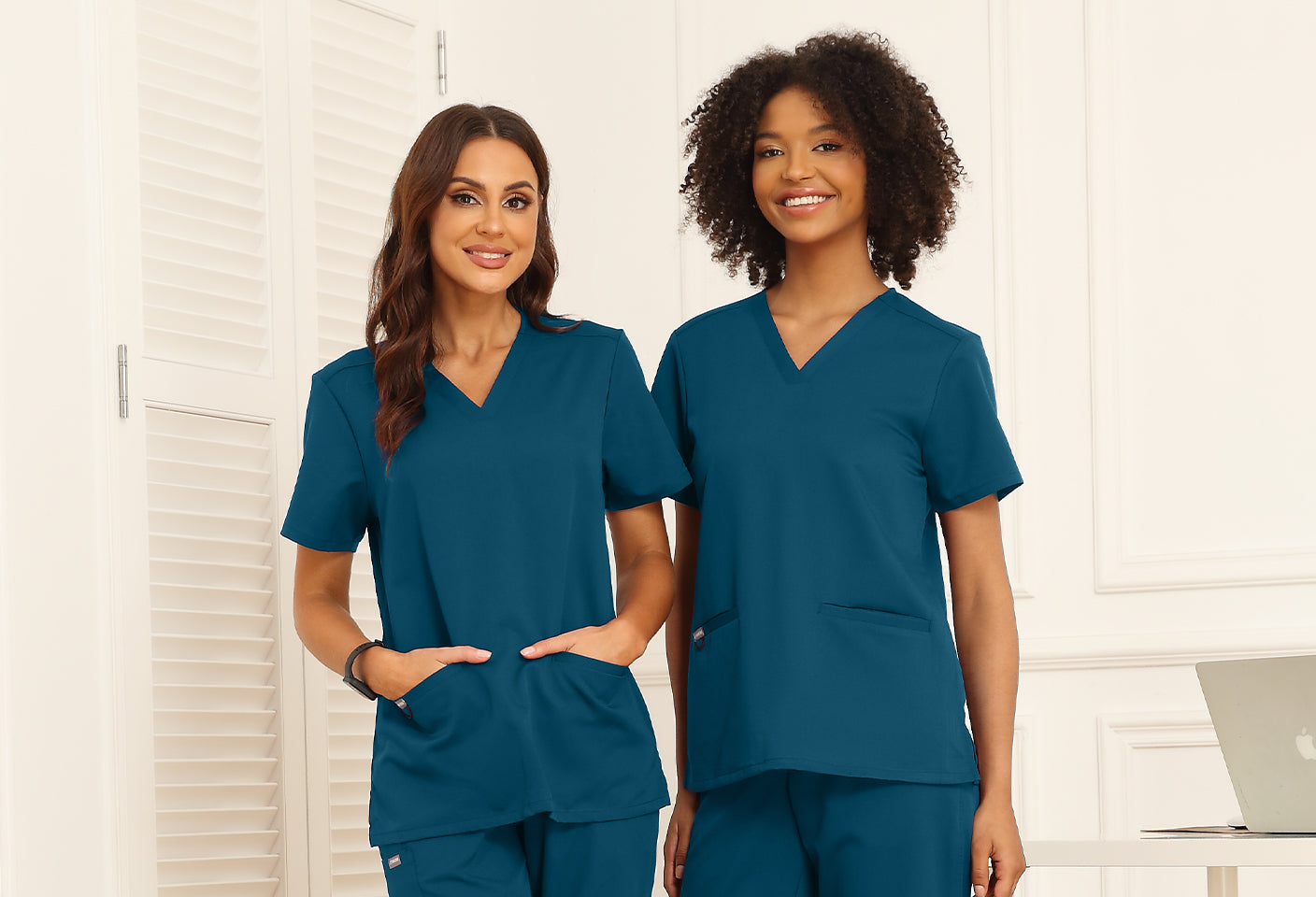

Medical Attire: A Key to Building Team Image

In the healthcare field, a medical team's image is more than just a surface impression; it significantly impacts patient trust, team unity, and overall care quality. Among the factors shaping this image, medical uniforms stand out as a tangible, multifaceted carrier. They are more than just work clothes—serving as a bridge between the team's professional identity and patients' perceptions, and reflecting the team's internal dynamics and values.
Visual Design: Uniformity and Differences
- Core uniform elements for overall image
The visual design of medical scrubs relies on uniform core elements to create a cohesive, recognizable team image. Basic color choices like navy scrubs, paired with consistent styles and logos, play a key role here. These hues, often associated with professionalism and cleanliness, help patients feel they are in an organized, reliable medical environment when they see staff in such attire. This uniformity also boosts team members' sense of belonging, strengthening their collective identity and collaboration.
- Subtle differences for role recognition
Proper differences in medical scrubs' visual design are vital for job recognition. For example, various elements can subtly distinguish departments or roles: pediatrics may use specific accent details to create a warmer vibe, while unique nursing uniform features might mark specific nursing roles. Operating room assistants, meanwhile, often have distinct scrub designs to signal their specialized function. These variations help patients quickly identify staff responsibilities, enabling better communication, and aid internal teamwork by clarifying roles. The mix of uniformity and differences forms a visual language that conveys both team unity and individual role distinctiveness.
Functional and Stylistic Design
- Functional features supporting professionalism
The design of healthcare uniforms prioritizes functionality to meet medical work needs. Features like multiple tool pockets, stretchy fabrics for movement, and stain-resistant materials enhance staff efficiency and comfort during shifts. When staff can perform duties unhindered by inappropriate clothing, it shows high professionalism, boosting patients' trust in their abilities.
- Stylistic and perceptual elements for rapport
Stylistic elements shape perceptions too. A well-designed scrub with a modern, neat look conveys competence and attention to detail, showing the team cares about both technical care and patients' overall experience. Perceptual aspects like soft, breathable fabrics create a more approachable, caring image. Patients feel more at ease interacting with staff in comfortable attire, helping build good rapport and strengthen doctor-patient relationships.
Conclusion
In essence, medical attire design integrates visual, functional, stylistic, and perceptual elements. By refining these, medical teams can build a positive, professional image that enhances cohesion and efficiency, and fosters patient trust. This image, shaped by thoughtful design of seemingly ordinary work clothes, ultimately improves the healthcare experience for everyone involved.