

The Evolution: From Sacred Robes to Modern Scrubs
Medical uniforms are more than just clothing—they are living artifacts of medical history, reflecting shifts in science, society, and human empathy. From the religious garb of medieval healers to today’s functional scrubs, each stitch tells a story of innovation. Let’s trace this evolution through four pivotal chapters, exploring how necessity, culture, and care have shaped what healthcare workers wear.
Medieval Roots: When Robes Carried Divine Meaning
In the Middle Ages, healing was intertwined with faith, and medical attire bore the marks of sacred duty. Monks and nuns, the primary caregivers of the era, wore long, dark robes not only to symbolize their spiritual mission but also to shield themselves from filth. These garments, adorned with crosses or religious emblems, served as both a badge of holiness and a primitive form of protection.
From Holy Garb to Practical Design
The transition from “sacred robes” to functional wear began with the plague doctors of the 17th century. Their iconic bird-beaked masks and leather coats, though steeped in superstition (filled with herbs to “ward off evil”), introduced a critical idea: clothing could actively protect. This shift laid the groundwork for modern scrubs, which prioritize both safety and mobility.
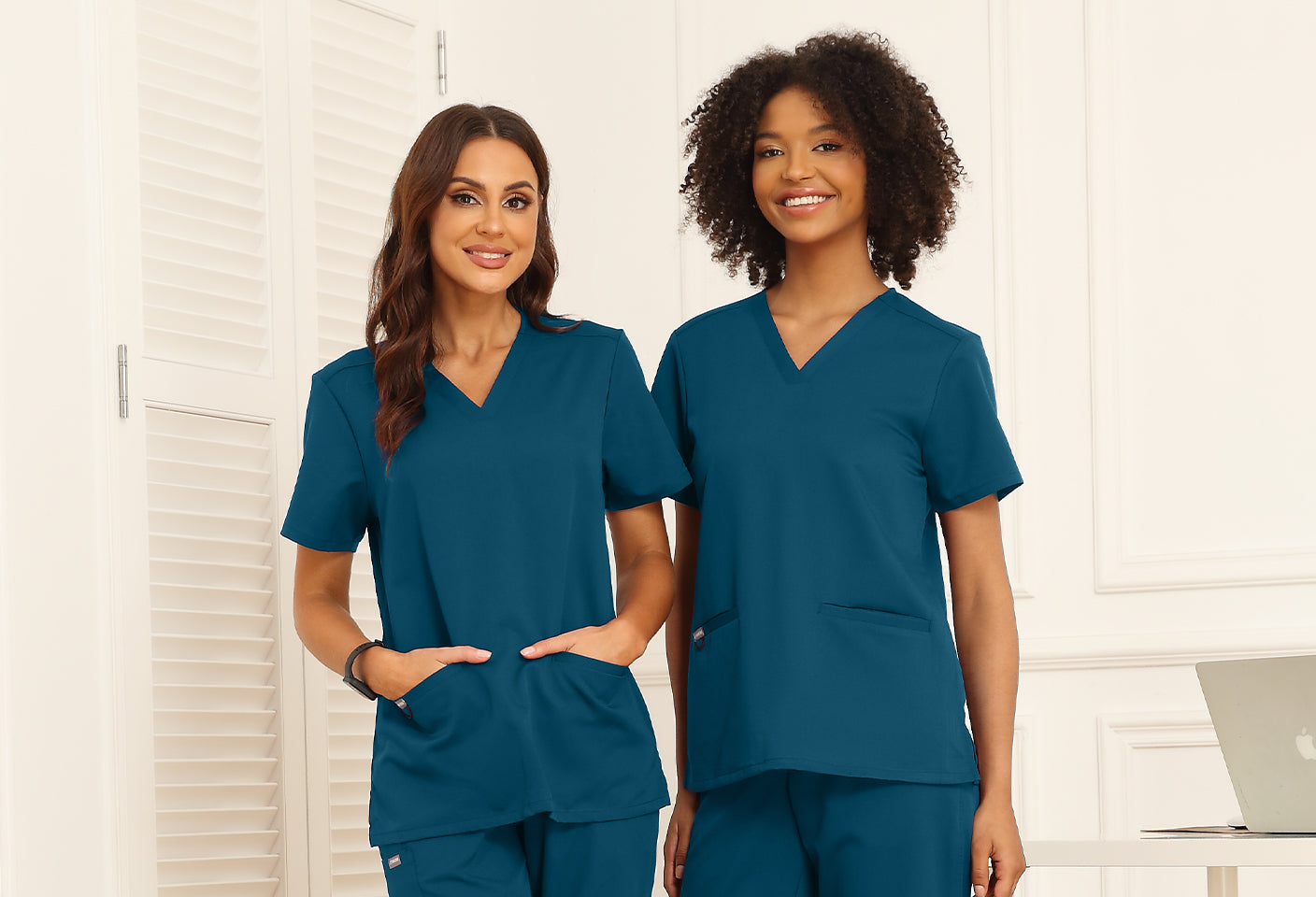
Today’s medical uniforms, like our lightweight scrub sets, honor this legacy. While we’ve shed the religious symbolism, the core principle endures: attire should empower caregivers, not hinder them. Our designs balance professionalism with practicality, ensuring every stitch serves a purpose—much like those early robes, but reimagined for the demands of modern healthcare.
The 19th Century: Sterility Rewrites the Rules
The 1800s marked a revolution in medical thinking, as scientists like Louis Pasteur uncovered the link between dirt and disease. This “germ theory” transformed medical attire from mere covering to a tool of hygiene.
Florence Nightingale’s Functional Vision
Florence Nightingale, the founder of modern nursing, led this charge during the Crimean War. Rejecting the grimy, formless garments of her time, she designed uniforms with clean lines, light colors, and simple silhouettes—all to emphasize cleanliness. Her focus on “function over frill” paved the way for today’s scrub tops and pants.
Nightingale’s emphasis on easy cleaning and unrestricted movement resonates in our designs. Our scrubs, with their breathable fabrics and neat cuts, carry forward her belief that clothing should support, not distract. The sterile ideals she championed live on, though we’ve traded heavy whites for versatile hues that suit diverse workplaces.
The Color Revolution: Beyond White
For decades, white dominated medical settings as a symbol of purity. But as healthcare evolved, so did our understanding of color’s role in care—from reducing eye strain to calming patients.
Why White Faded, and Color Thrived
White’s decline in popularity stems from practical challenges: harsh lighting in operating rooms combined with white clothing causes eye fatigue during long surgeries. Pediatric patients, too, often find all-white environments intimidating. Enter colored scrubs: soft blues, gentle greens, and warm burgundies now fill hospitals, chosen for their ability to soothe and focus.
Our collection embraces this shift. Navy scrubs, for example, convey calm in high-stress ERs, while subtle greens reduce visual strain in surgery. These choices aren’t just aesthetic—they’re rooted in research, ensuring our garments support both caregivers and those in their care.
Gender, Identity, and the Rise of Inclusivity
Medical attire has long mirrored societal views on gender, from restrictive 19th-century nurse uniforms (modeled after nun’s habits) to the “unisex” designs of today.
Breaking Free from Stereotypes
Early 20th-century uniforms often confined women to frilly, form-fitting dresses and men to stiff coats—reinforcing outdated roles. Today, we’ve moved toward designs that prioritize comfort and equality. Our stretchy scrubs, with adjustable waists and inclusive sizing, fit all bodies, letting healthcare workers focus on their jobs, not their clothes.
This shift reflects a broader truth: great medical attire honors individuality. Whether you’re a nurse in scrubs or a surgeon prepping for an operation, your uniform should feel like an extension of your professionalism—not a constraint.
Conclusion: Scrubs as a Story of Progress
From medieval robes to modern scrubs, medical attire has always adapted to humanity’s changing needs. It’s a testament to our drive to heal better, care deeper, and respect every person behind the uniform.
At our brand, we’re proud to carry this legacy forward. Our scrubs—practical, inclusive, and thoughtful—are more than garments. They’re tools for those who dedicate their lives to others. Because in the end, the best medical attire doesn’t just look good—it helps make the world healthier.