
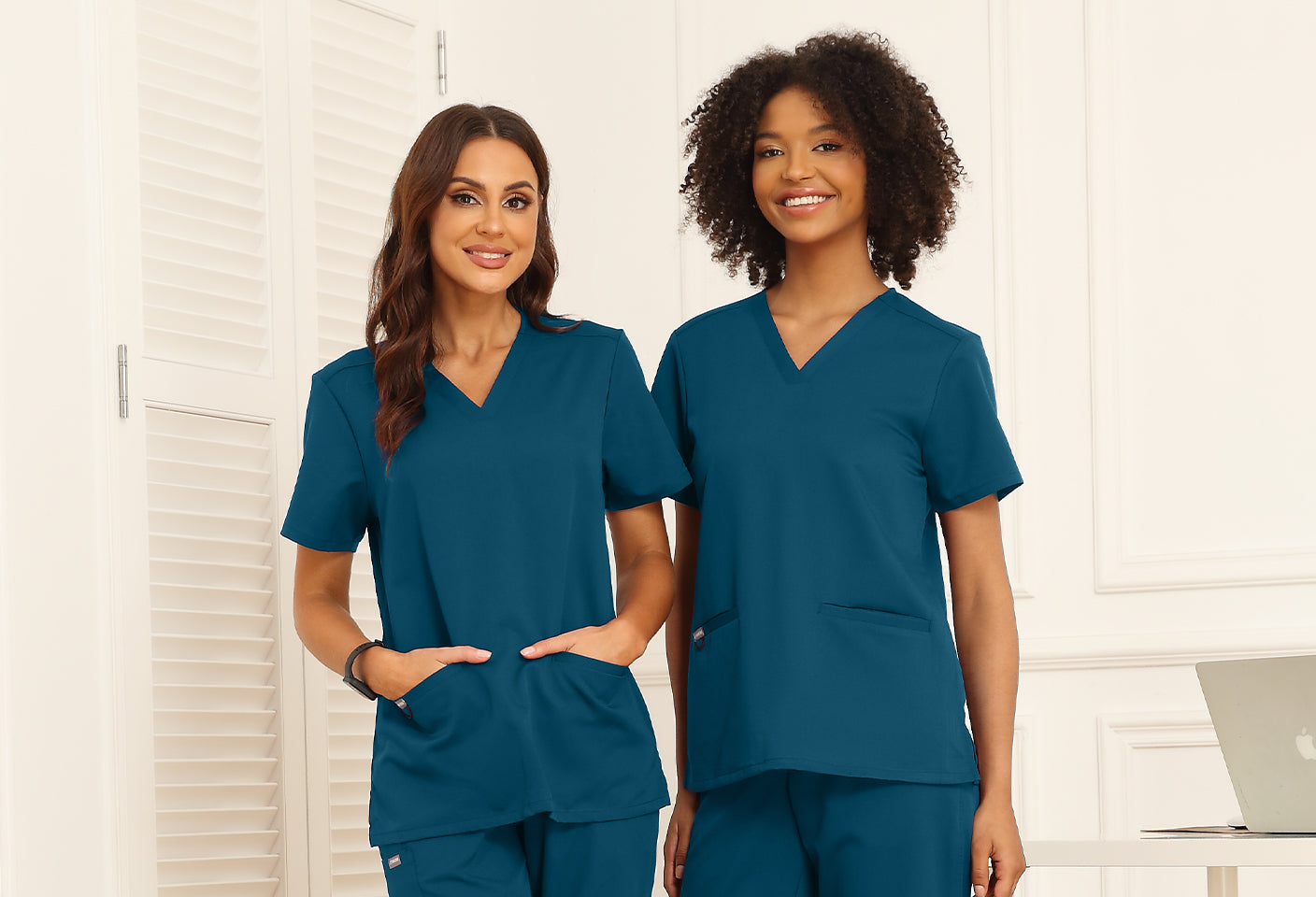

Scrubs 101: Their Role in Modern Medicine
Scrubs aren't just a "uniform" for healthcare professionals—they've evolved into the mainstream standard across medical institutions worldwide. This shift isn't accidental; it's driven by the unique needs of medical settings, which demand a balance of practicality, safety, professionalism, and efficiency. Below is a structured breakdown of the core reasons behind their widespread adoption.
Practical Design Meets the Rigors of Medical Work
Medical work requires constant movement—bending, squatting, rushing between wards, and handling tools—so functional clothing is non-negotiable. Scrubs are engineered to address these demands, with three key design strengths:
• Mobility-focused fit: Their loose, breathable construction allows unrestricted movement during 12+ hour shifts, preventing discomfort from tight fabric when performing physical tasks.
• Utility-driven details: Deep, reinforced pockets are strategically placed to hold essential tools (pens, thermometers, small medical devices), keeping items within arm's reach and reducing time spent searching for supplies.
• Minimalist functionality: Unlike regular clothing, scrubs avoid cumbersome decorations, sharp buttons, or tight seams that could catch on hospital beds, carts, or equipment—eliminating workflow disruptions.
This "no-frills, high-utility" approach aligns perfectly with the fast-paced, task-oriented nature of medical work, making scrubs irreplaceable for daily duties.
A Critical Line of Defense in Infection Control
Infection prevention is a top priority for medical institutions, and scrubs play a pivotal role in minimizing cross-contamination. Their design and material choices directly support hygiene goals:
• Easy-to-disinfect fabrics: Most scrubs are made from synthetic blends that withstand high-temperature washing (up to 60°C) and strong disinfectants—critical for eliminating pathogens picked up from patients or contaminated surfaces.
• Bacteria-resistant design: Simple, seamless construction reduces hiding spots for dirt and germs, unlike patterned or layered clothing that traps contaminants.
• Contamination separation: Standardized scrubs are worn exclusively within the medical facility, separating workwear from personal clothes. This limits the risk of bringing external pathogens into sterile areas (e.g., operating rooms) or carrying hospital germs home.
For institutions, this standardized hygiene solution simplifies infection control protocols and enhances safety for both patients and staff.
Unifying Professional Image and Enhancing Patient Trust
A consistent, professional appearance builds patient confidence—and scrubs deliver on this front in three key ways:
• Clear staff identification: Standardized scrubs create a cohesive "team look," making it easy for patients to distinguish between roles (doctors, nurses, technicians) at a glance—reducing confusion in stressful environments.
• Distraction-free design: Clean, understated colors (e.g., navy, burgundy, pale blue) and simple silhouettes avoid drawing attention to clothing, shifting focus to the care itself rather than personal style choices.
• Cultural cohesion: Uniform attire fosters a sense of teamwork among staff, reinforcing accountability and collaboration. For patients, this unity signals a well-organized care team, easing anxiety about treatment quality.
The sight of a healthcare provider in scrubs has become a universal signal of expertise and reliability, strengthening the patient-provider relationship.
Cost-Effective and Efficient for Institutional Procurement
For institutions managing large teams (e.g., hospitals with 1,000+ staff), scrubs offer unmatched operational and financial efficiency:
• Durability for frequent use: Their tough, low-maintenance fabrics resist fading, pilling, and wear—even with daily washing (a healthcare necessity)—reducing replacement costs over time.
• Bulk procurement savings: Scrubs are affordable to buy in large quantities, making them a budget-friendly alternative to custom uniforms or personalized workwear.
• Simplified inventory management: Standardized sizes and limited styles eliminate the hassle of tracking diverse clothing options. Staff also save time—no need to plan outfits or maintain high-maintenance workwear.
This efficiency lets institutions redirect resources to patient care rather than clothing logistics.
Aligning with Industry Standards and Regulatory Expectations
Scrubs have become embedded in medical industry norms, driven by regulatory requirements and best practices:
• Compliance with safety guidelines: Healthcare accrediting bodies (e.g., Joint Commission, WHO) often recommend or mandate standardized, hygienic attire to protect patients. Scrubs naturally meet these standards, avoiding non-compliance risks.
• Adaptability to evolving practices: As medical guidelines update (e.g., stricter infection control post-COVID, expanded telehealth), scrubs have evolved (e.g., anti-microbial fabrics, moisture-wicking blends) to stay relevant.
• Global consistency: Scrubs are recognized as the standard across countries, making them ideal for multi-location institutions or staff who move between facilities.
Adopting scrubs isn't just a trend—it's a way for institutions to adhere to proven standards of care and professionalism.
Conclusion: Scrubs Are the Result of "Perfect Alignment" with Medical Needs
Scrubs have risen to mainstream status not because of a single advantage, but because they address the core needs of medical institutions:
• Practicality for staff (mobility, utility),
• Safety for patients (infection control),
• Professionalism for care delivery (unified image),
• Efficiency for operations (cost savings, logistics).
They're a rare example of clothing that balances function, hygiene, and culture—adapting to healthcare's unique challenges while remaining simple and reliable. As medical practices evolve, scrubs will likely remain the gold standard, a silent but essential part of delivering high-quality, safe patient care.