
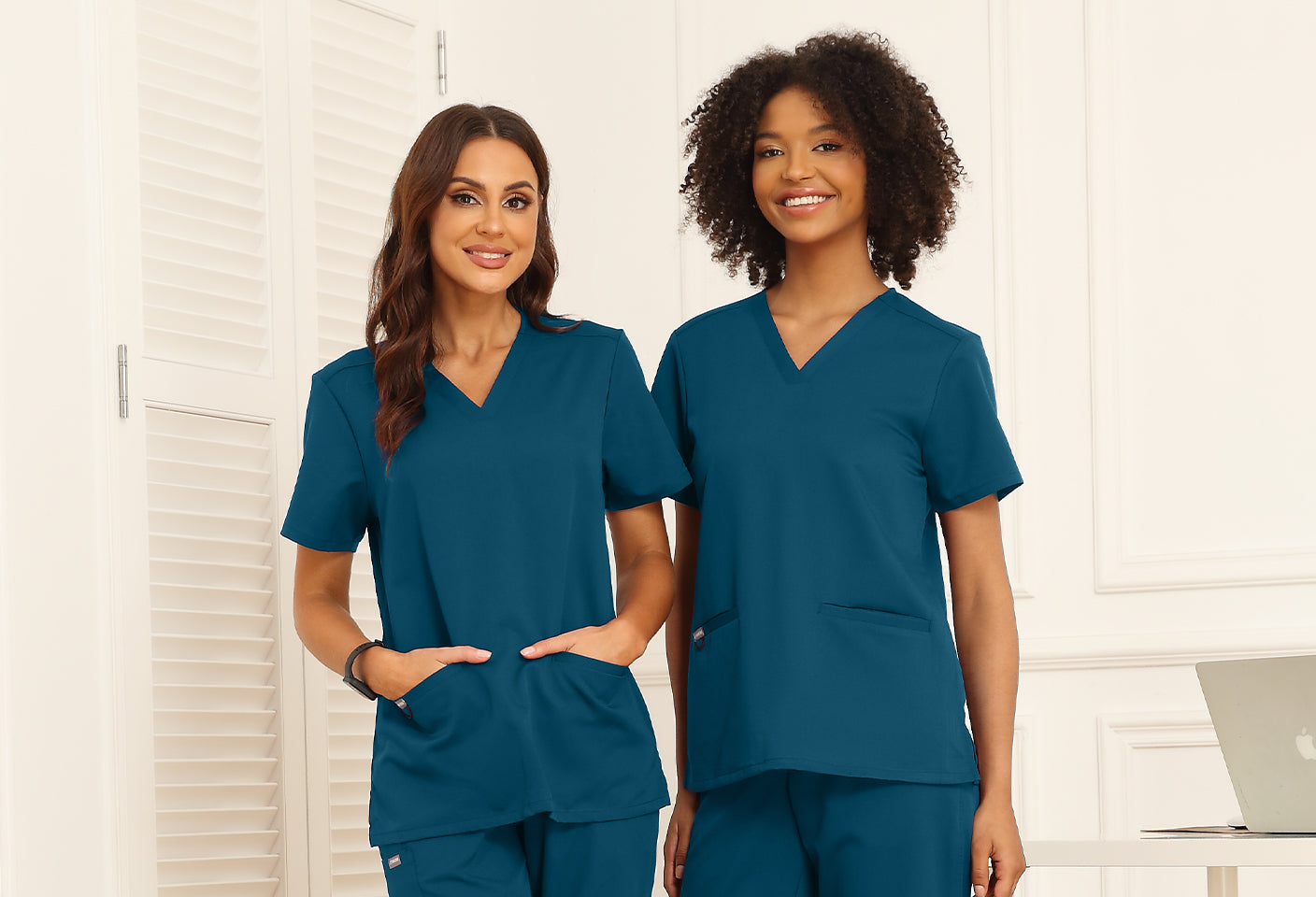

Medical Uniform Trends: 4 Keys to Shaping Scrubs
Gone are the days when medical uniforms were limited to stiff whites and one-note functionality. Today, medical uniforms (a term encompassing everything from nursing uniforms to scrub apparel) are defined by a fusion of practicality, inclusivity, and versatility—all centered on design that serves both professional needs and wearer comfort. Modern scrubs uniforms, the face of this evolution, aren’t just "work clothes" anymore; they’re a reflection of how design can adapt to changing lifestyles and clinical demands. Below, we dive into the four most impactful design trends driving the future of scrub clothing, each tailored to elevate both form and function.
Mainstream-Focused Design: Blending Clinical Identity with Daily Wearability
A top medical uniform fashion trend today is the shift toward "cross-scene design"—scrubs that work as well in a clinic as they do in a coffee shop or grocery store. This isn’t just about style; it’s a design philosophy that rethinks what scrub apparel can be, with styles like jogger scrubs leading the charge.
Key design choices fueling this trend:
- Fabric curation: Lightweight, moisture-wicking blends (replacing heavy, non-breathable traditional fabrics) that feel soft against skin yet stand up to frequent hospital washes. These fabrics often have a subtle texture (like micro-ribbing) to add visual interest without looking unprofessional.
- Silhouette refinement: Relaxed, tailored fits—exemplified by jogger scrubs with their tapered legs and elastic cuffs—that flatter without restricting movement. Think structured shoulders that don’t slump and waistbands that sit comfortably without digging in, bridging the gap between "clinical uniform" and "everyday casual."
- Color palette expansion: Neutral tones (soft grays, muted blues, warm beiges) dominate, replacing harsh whites. These hues feel approachable for daily outings while still maintaining a polished, professional look in clinical settings.
The result? Scrubs uniforms that wearers don’t rush to change out of after a shift—aligning with the trend of seamless work-life integration.
Functional Multi-Pocket Design: Tool-Centric Details for Clinical Efficiency
Functionality has always been key for medical uniforms, but today’s fashion trends take it further with "purpose-built pocket design"—a focus on how pockets can streamline workflows, not just hold items. This trend is all about intentionality: every pocket has a job, and its design supports that job, whether you’re reaching for supplies in scrub sets or grabbing a pen from your scrub top.
Standout design features of this trend:
- Modular pocket zones: Separate sections for different tools—small, zipped inner pockets for ID badges and smartphones (to prevent loss), deep, reinforced side pockets for stethoscopes and pens (with elastic loops to keep items from shifting), and hidden back pockets for personal items (like a lip balm or key).
- Ergonomic placement: Pockets are positioned above the hip (not at the waist) to avoid discomfort when bending or sitting, and away from elbow creases to prevent snags during patient care—ideal for both scrub tops and scrub pants in a full scrub set.
- Low-profile styling: Pockets lie flat when empty (thanks to thin, durable linings) so scrubs don’t look bulky—keeping the silhouette clean while maximizing utility for every part of a scrub set.
This design trend turns pockets from an afterthought into a core part of the scrub’s value, proving that functionality can be stylish.
Inclusive Sizing Design: Full-Coverage Fits That Honor Every Body
Inclusivity isn’t just a buzzword—it’s a defining medical uniform fashion trend today, with design that prioritizes full-size coverage (from XXS to 5XL) and tailored fits for all body types. This trend rejects the old "one pattern scaled up" approach; instead, it’s about reengineering scrubs to fit every wearer comfortably, especially when it comes to plus size scrubs.
Key inclusive design elements:
- Body-specific pattern adjustments: For plus size scrubs—one of the most in-demand categories in inclusive medical uniforms—designers tweak more than just width. They deepen armholes to prevent tightness when reaching, adjust shoulder slopes to avoid slipping, and extend torso lengths to keep waistbands from riding up. For smaller sizes, they reduce excess fabric around the hips and thighs to avoid a "swamped" look.
- Adaptive details: Elastic waistbands with adjustable drawstrings (instead of fixed tension) that accommodate fluctuating sizes—perfect for plus size scrubs or maternity scrub pants. Some styles even include hidden side slits for extra mobility, ideal for wearers who need more room to bend or stretch.
- Consistent styling across sizes: Every size—from petite scrub tops to plus size scrubs—gets the same design details (pockets, color options, fabric quality)—no "watered-down" versions for extended sizes. This ensures all wearers feel equally professional and stylish.
This trend isn’t just about size; it’s about dignity—proving that great design should be accessible to everyone.
Scene-Expanded Design: Scrubs for Healthcare and Beyond
Another major medical uniform fashion trend is "multi-use design"—scrubs that transcend healthcare settings to fit roles like lab work, pet care, spa therapy, and even loungewear. This trend is driven by design choices that make scrub clothing adaptable to different environments, without losing their clinical roots.
Design adaptations for cross-scene use:
- Industry-specific tweaks: For labs, scrubs use stain-resistant, chemical-resistant fabrics; for spas, they opt for soft, muted pastels and lightweight knits (think "cute scrubs" that feel calming for clients); for pet care, they add reinforced knees and dirt-repellent coatings.
- Casualization details: Some styles include subtle design flourishes (like contrast stitching, curved hems, or removable collars) that make them feel less "uniform" and more "loungewear-chic" for at-home days—even for pieces like long sleeve scrub tops.
- Durability balancing: Fabrics are designed to be both gentle (for all-day wear) and tough (for high-activity roles)—a balance that makes scrub sets suitable for everything from drawing blood to walking a dog.
This trend highlights how medical uniform design is no longer confined to clinics; it’s about creating apparel that works as hard as the people who wear it, in every part of their lives.
Conclusion
Today’s medical uniform fashion trends are clear: design must be purposeful, inclusive, and flexible. From cross-scene silhouettes (like jogger scrubs) to tool-centric scrub sets, from plus size scrubs to multi-use adaptations, every trend is rooted in understanding what wearers need—both in the clinic and beyond. Modern best scrubs—whether they’re tailored for women, men, or curvy bodies—prove that medical apparel can be functional and fashionable, professional and personal. As these design directions evolve, the line between "medical uniform" and "everyday wear" will only blur further—making scrubs a staple for anyone who values comfort, style, and practicality.